Can Copper Peptides Cause Breakouts? What Happened on My Acne-Prone Skin
Across four copper peptide products used over several months on sensitive, reactive, acne-prone skin, I did not break out from any of them, and the parts of a formula most likely to cause breakouts are usually the carrier oils, occlusives and fragrance rather than the copper peptide itself.
Four products, months of use, no breakouts
My skin is sensitive, reactive and acne-prone. It complains fast and it complains often. Across four different copper peptide products, none of them broke me out. That includes a rich cream I used as the final step of my routine for seven weeks, which is the format I expected trouble from.
Rather than argue that from theory, here is what each one actually did. The formats differ a lot, and the format is the part that matters.
The Ordinary Multi-Peptide + Copper Peptides 1%
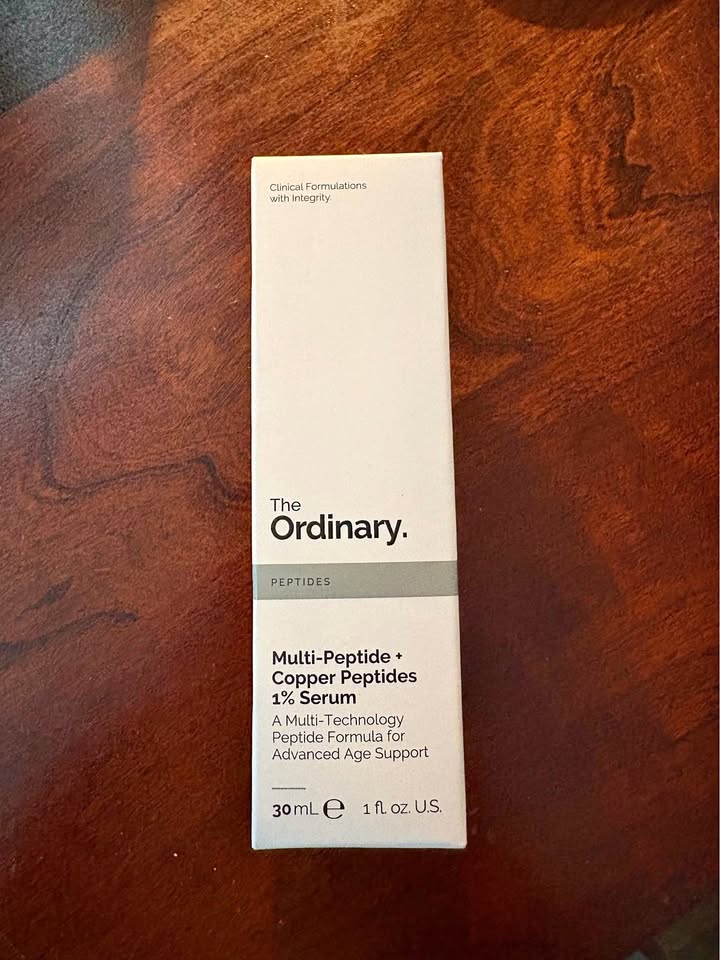
Daily for seven weeks, layered over the rest of my routine. No breakouts. It absorbs quickly and leaves a subtle glow instead of a greasy film, and once it dried down I could not feel it. There is a faint metallic smell you stop noticing after a few uses. I got slight stinging on the very first application, barely noticeable after that. My longer write-up is in my seven-week review of The Ordinary copper peptide serum.
COSRX Blue Peptide Bakuchiol Plump Glow Serum
Twice daily for eight weeks. Zero irritation, no breakouts, nothing. Lightweight and silky. I will flag the thing I would want flagged to me: other users of this product report redness and itching. I did not get it, and that split is covered properly in my eight-week review of the COSRX serum.
COSRX Blue Peptide Bakuchiol Plump Bounce Cream
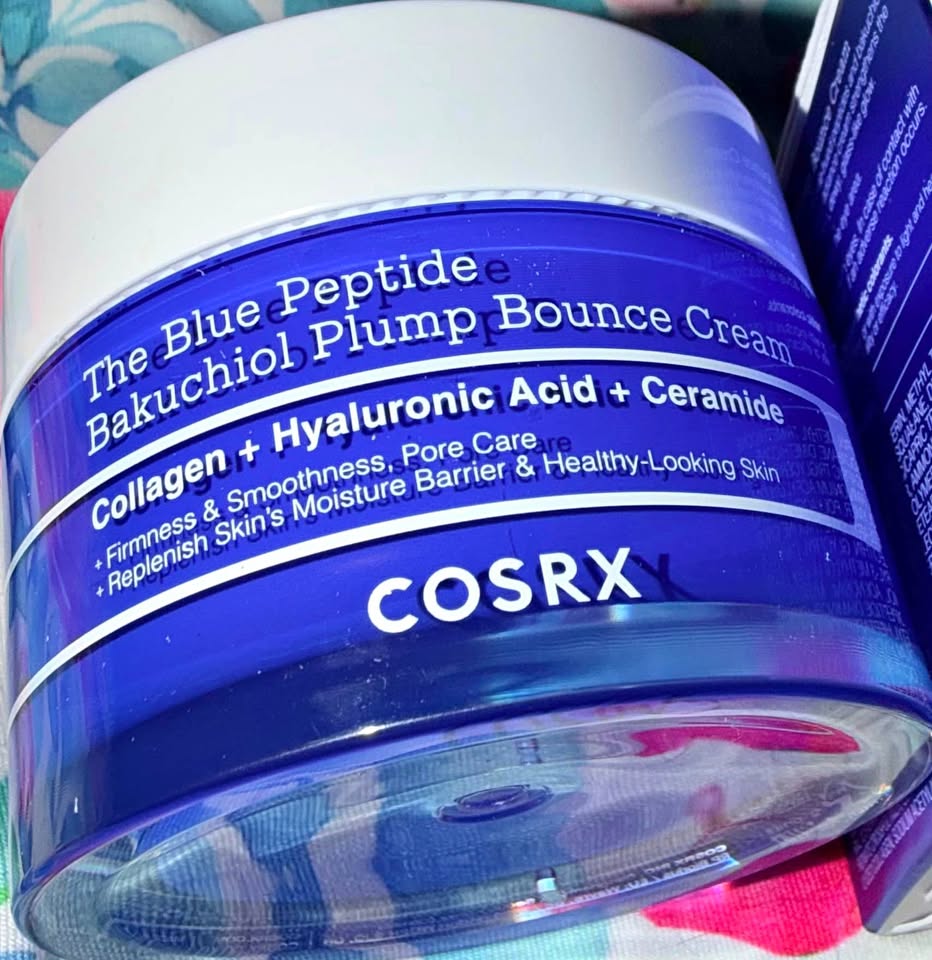
Twice daily for seven weeks, sitting on top of everything else as the last step. This is the one I watched hardest. Thick final-step creams are where breakout-prone skin usually gets into trouble, and this one gave me nothing to complain about across the whole run. Nothing at all registered until roughly week four. After that my face read as fuller and firmer to me, with the texture looking more even. Full notes in my seven-week review of the COSRX cream.
Biossance Squalane + Copper Peptide Rapid Plumping Serum
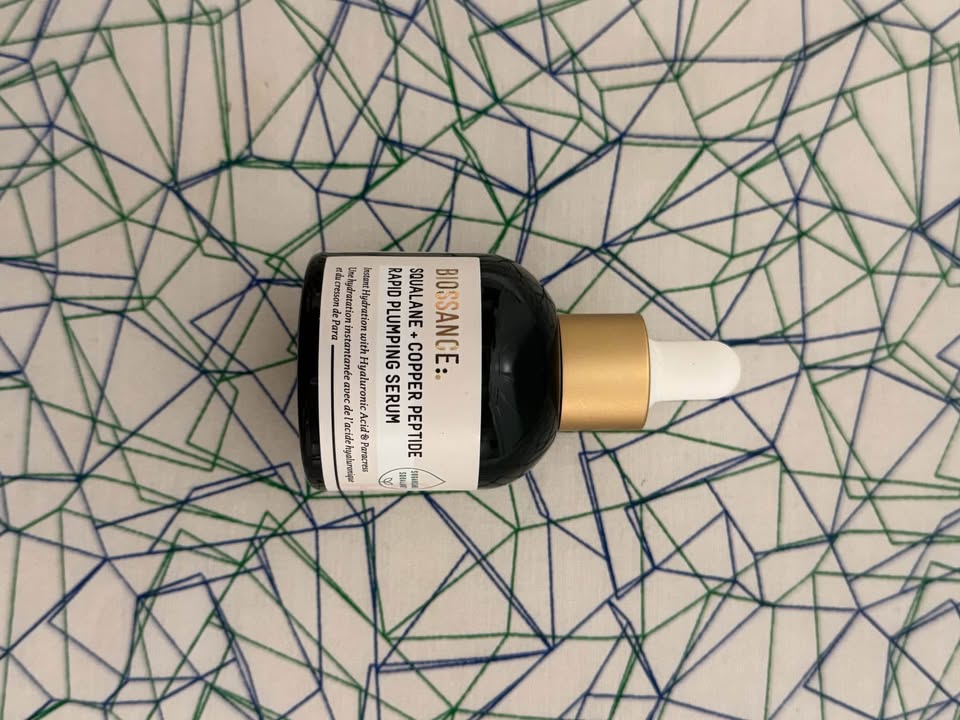
Twice daily for two and a half months. No breakouts for me. This one carries a real asterisk though, and the asterisk has nothing to do with the peptide.
Why the peptide is rarely the culprit
Copper Tripeptide-1 is a tiny water-soluble molecule dosed at fractions of a percent. It is not a plausible pore-clogging candidate. Whatever else is in the bottle makes up almost all of the product, and that is where the trouble usually lives.
Three things do most of the damage. Carrier oils and rich emollients, because the delivery system is the bulk of what you are putting on. Occlusives, because a cream built to seal a routine in seals in everything underneath it too. And fragrance, which is less about clogging pores and more about irritation, and irritated breakout-prone skin has a habit of responding by breaking out.
There is a fourth cause that gets blamed on the product least often and deserves it most: you added a new bottle to an existing routine and attributed whatever happened next to the new bottle.
None of this is specific to copper peptides. It is just formulation.
For oily skin, the base is the real decision
Back to the Biossance asterisk. That serum uses a squalane base, and squalane is a comfortable, hydrating carrier. It is a big part of why the product feels premium and why my skin felt plumper from the first few uses. But it is oil-adjacent, and oil-adjacent bases suit normal-to-dry skin better than they suit very oily skin. That holds regardless of what is dissolved in them.
So if you are oily and congestion-prone and nervous about this ingredient, the question in front of you is not really “copper peptides, yes or no.” It is two narrower questions: water-based serum or oil-based serum, and do you want the copper peptide in your serum step or your moisturizer step.
Read the base, not the front of the box. Base, cost per ml and label disclosure are the three things the comparison table that runs this site scores every product on.
Stinging is not a breakout
The one unpleasant thing I hit across all four products was that first-use sting on The Ordinary. Slight, once, gone afterwards.
Worth separating those two ideas, because people file them together. A brief sting on application is a tolerance signal. It is not congestion and it does not predict congestion. Mine settled within a couple of uses.
Stinging that does not settle is different, and so is redness or itching that persists. That is your skin telling you something specific, and the response is to stop, not to push through and hope.
Patch test before you commit your face
I had no reaction to any of these. Other people have. My clean run does not cancel out the users reporting itching on the COSRX serum, and you have no way of knowing in advance which group you are in.
So spend a few days on it. Jaw or the side of the neck, same frequency you plan to use it at, and watch. It costs you almost nothing, and patience is the entry fee for this ingredient regardless: none of these products did anything meaningful for me inside the first month.
Two more things stack the odds. Add one new product at a time, so when something goes wrong you know what did it. And start with a lightweight water-based serum rather than a rich cream, so the first thing you test is the format least likely to cause a problem.
What this is worth to you
Four products, one face, runs of seven weeks to two and a half months. That is a data point, not evidence that copper peptides are non-comedogenic, and it cannot tell you what your skin will do.
What I think it is genuinely worth: sensitive, reactive, acne-prone skin tolerated four different formats of this ingredient, including the heavy occlusive one, without a single breakout. And when a copper peptide product does cause you a problem, the carrier, the occlusives and the fragrance are where I would look before I blamed the peptide.
Every product named above is one I bought at retail and used myself for the period stated. I have no relationship with any of these brands. Nothing here is medical advice, and if something is causing you a reaction the answer is to stop using it and speak to someone qualified. My full methodology is on the how we research page.