Does "1% Copper Peptides" Actually Mean 1% GHK-Cu? What the Label Hides
The short answer
Not necessarily. On some products, the “1%” refers to GHK-Cu (Copper Tripeptide-1) specifically. On others, it refers to a total peptide blend, or the brand simply never says. The only ways to know are: the brand explicitly states the per-active figure, or you read the INCI ingredient list and see where the copper peptide sits.
This single ambiguity is the most useful thing to understand before buying any copper peptide product, because two serums both labeled “1%” can contain very different amounts of the researched molecule - at very different prices.
First: the molecule to look for is Copper Tripeptide-1
The copper peptide with the actual research behind it is GHK-Cu - a small copper-bound peptide (glycine-histidine-lysine plus a copper ion) that biochemist Loren Pickart first isolated from human plasma in 1973. It appears on ingredient lists under its INCI name, Copper Tripeptide-1. That’s the molecule behind the peer-reviewed research on skin repair, collagen support, and inflammation, and that exact phrase is what you’re scanning the label for.
If a product’s ingredient list instead shows a different copper compound - “Copper Lysinate/Prolinate,” “Copper PCA,” or just vague marketing like “blue copper complex” - you’re looking at a different, less-researched ingredient wearing the copper peptide halo. Check the INCI, not the front of the bottle.
What the big two actually say
We checked the current labels and brand pages directly (July 2026):
The Ordinary Multi-Peptide + Copper Peptides 1% (official page, full INCI): the good news is that the current formulation contains the correct molecule - Copper Tripeptide-1 sits fourth in the ingredient list, which is a strong position. The catch: the brand does not publish a per-active breakdown, so the “1%” in the name is not explicitly attributed to GHK-Cu alone. This is a multi-peptide formula with seven or more peptide technologies, and how the 1% splits across them isn’t stated. We grade that Partial transparency: right molecule, prominent placement, undisclosed split.
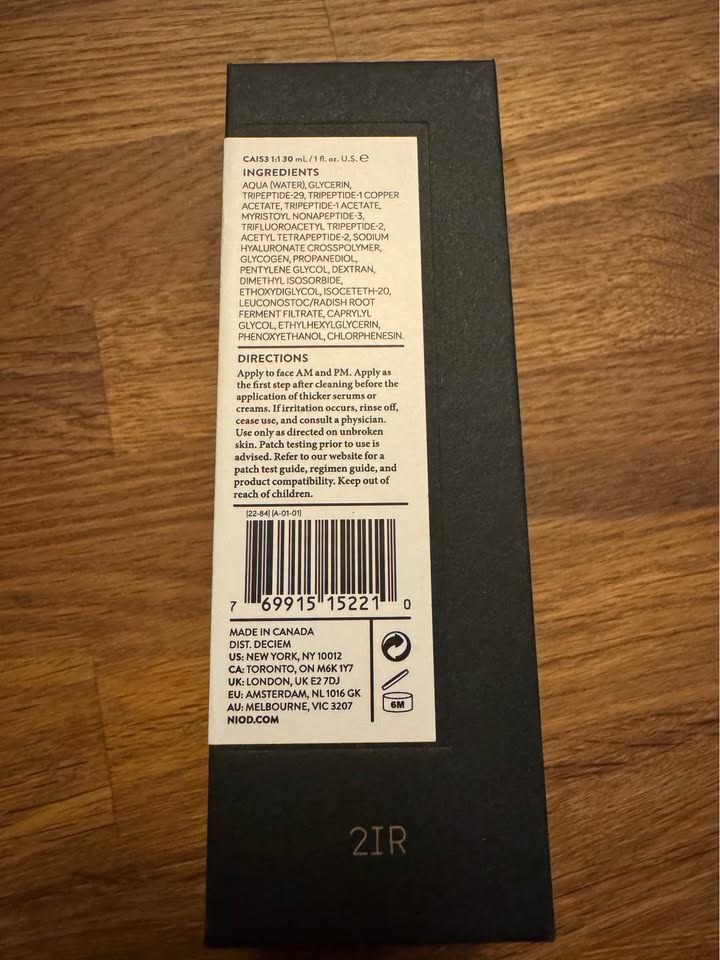
NIOD Copper Amino Isolate Serum 3 (CAIS3) (official page): NIOD states the figure per active - 1% by weight of GHK-Cu specifically, plus 1% free GHK peptide. That’s what full disclosure looks like, and it’s a real part of what the premium price buys. We grade it Disclosed.
A note on internet claims - we fact-checked both directions
Some peptide-vendor blogs claim mass-market serums like The Ordinary’s don’t contain real GHK-Cu at all, or contain only trace amounts (one vendor estimates under 0.1–0.2%). Treat those claims with the same skepticism as brand marketing: the companies making them sell competing copper peptide products. When we checked the current INCI list ourselves, The Ordinary’s serum does contain genuine Copper Tripeptide-1, high in the ingredient list - the vendor claim about a substitute copper compound does not match the current label.
The deeper point stands, though: because most brands don’t disclose per-active percentages, nobody outside the company actually knows the real GHK-Cu figure. Even third-party estimating tools disagree with each other by an order of magnitude on the same product. Non-disclosure is itself a data point - and it’s the axis almost nobody scores products on. We do: see the transparency column in our master copper peptide comparison.
For scale, compounding pharmacies formulate prescription topical GHK-Cu at roughly 1–3% - the levels many published studies used. Most cosmetic serums, where disclosed, sit at or below 1%, and some disclose figures as low as 0.2%. Neither is “fake”; they are different strengths at different prices, and you deserve to know which one you’re buying.
Does concentration even matter, though?
Here’s where we’ll be straight with you instead of scaring you toward the most concentrated bottle on the shelf: higher is not automatically better. Published research shows GHK-Cu triggers cellular responses at astonishingly small concentrations - down in the nanomolar range - far below what’s on any product label. What actually limits results usually isn’t the percentage; it’s penetration and stability: whether the intact copper complex survives in the formula and actually reaches living skin.
That flips the usual takeaway. A well-formulated, well-packaged 0.2% serum can outperform a poorly formulated “1%” one. So concentration transparency matters less because “more is better” and more because a brand hiding the number is often hiding a small number while charging for the impression of a large one. You’re paying for disclosure and formulation quality, not for a race to the highest percentage.
For a beginner, the practical conclusion runs the opposite way from the marketing: a lower, disclosed concentration is a smart place to start. It lets your skin adjust, and very high-strength copper peptides can be too much for someone new to the ingredient.
How to read a copper peptide label in 30 seconds
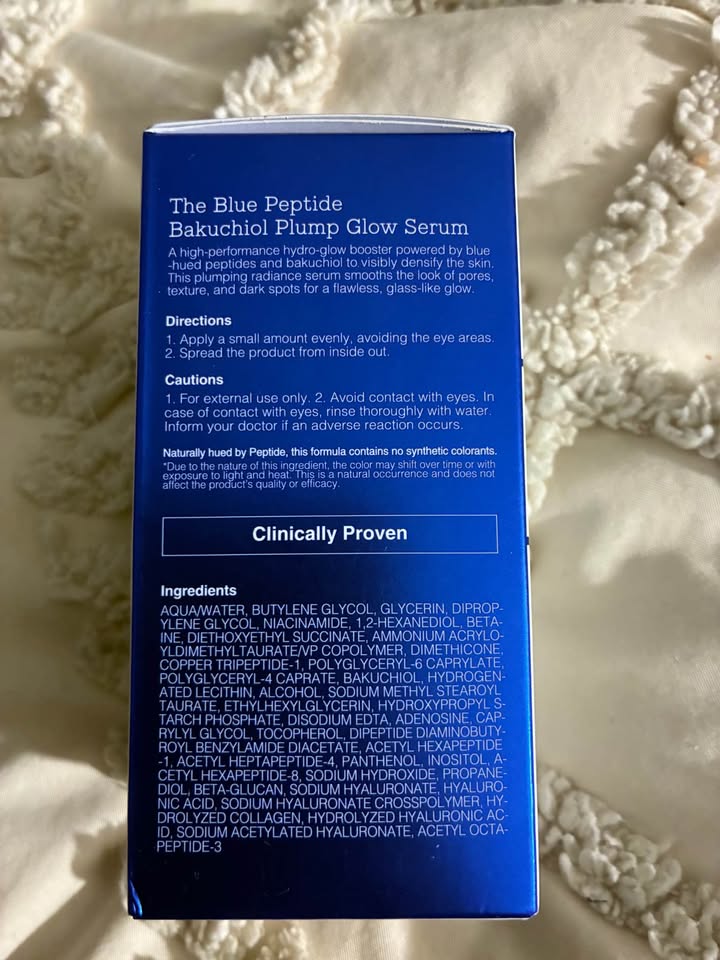
- Find the INCI list (the legally required ingredient list, usually on the box or the brand’s site - not the marketing copy).
- Look for “Copper Tripeptide-1.” If it’s absent, whatever is making the serum blue isn’t the researched molecule.
- Check its position. INCI lists run in descending order above 1% concentration. Top-five placement is meaningful; bottom-of-the-list placement (below the preservatives) suggests a token amount.
- Look for a stated per-active percentage. “1% GHK-Cu” is disclosure. “1% peptide complex” is not the same claim. Silence is your answer too.
- Is it blue? The intact copper complex has a light blue or teal color. A colorless or brown “copper” serum can signal a degraded or different compound - a rule with exceptions, but a useful gut check.
- Any vitamin C in the same formula? Ascorbic acid can destroy the copper complex, so the two don’t belong in the same bottle - or, ideally, the same step of your routine.
- Compute price per ml. Concentration claims aside, a $70 serum in a 15ml bottle and a $50 serum in a 50ml bottle are wildly different purchases.
Why this matters more for men
Men’s skincare marketing leans hard on “clinical” and “high-performance” language while disclosing less than mainstream brands. If you’re buying copper peptides for post-shave recovery or as a low-effort anti-aging step - the two most common reasons men land on this ingredient - the label ambiguity is how you end up paying premium prices for entry-level concentrations. My master comparison (linked above) scores every serum I cover on exactly this.
We report disclosed label figures, INCI ingredient positions, and cited third-party analysis. We have not lab-tested any product’s concentration - no consumer site has - and we’ll always tell you which kind of claim you’re reading. More on that on our how we research page.